

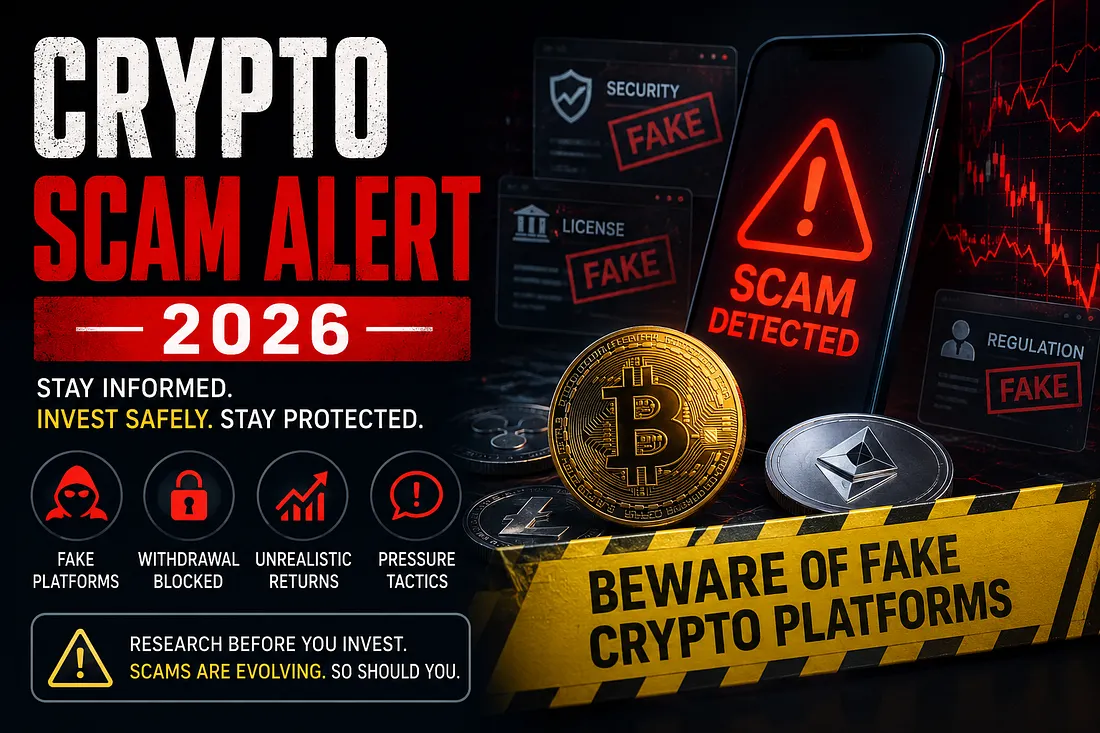
How to Spot Fake Crypto Investment Platforms Before You Lose Money
Consumer Awareness Content by
Zevion Expoint
Fake investment platforms are getting more convincing.
Here is how they work, the warning signs to watch for,
and what to do if you think you have been targeted.
Why Crypto Attracts Scammers
Crypto transactions are generally irreversible once they are
confirmed on the blockchain, which makes them attractive to
fraudsters. Many scammers operate across several countries
and hide behind anonymous wallets, shell companies and invented
regulatory credentials. Because the money is hard to trace and
harder to recover, victims often have little recourse once
funds are sent.
How the Scams Work
Many victims are first drawn in by promises of guaranteed returns,
AI-powered trading systems, exclusive opportunities or mining
schemes that claim to produce easy profits. Scammers often build
convincing websites and apps, post fake customer reviews, run
paid social media adverts and pretend to represent established
financial firms.
The pattern usually follows a set path. The platform shows steady
gains on a dashboard, encouraging the victim to deposit more.
When they try to withdraw, they are asked for extra “verification”,
“tax” or “release” fees. Each payment is demanded in order to
access the money, and the withdrawal never arrives. Communication
often stops once the victim has sent enough.
Warning signs to watch for
- Promises of guaranteed or unusually high returns with little risk.
- Pressure to deposit quickly, or an offer that seems available only for a short time.
- Requests for fees before a withdrawal can be made.
- A regulator licence that cannot be checked or that belongs to someone else.
- Website addresses with small misspellings of well-known brands.
- Contact only through messaging apps or social media, with no clear company details.
- Unsolicited approaches from “advisers” who offer to manage your money.
Protecting Your Crypto
Check any platform before you deposit. Look up its licence on
the official website of the financial regulator in the country
where it claims to operate, rather than relying on a logo or a
link provided by the platform. Be wary of unfamiliar domains,
and make sure you have typed the address yourself rather than
clicking it from an advert or message.
Scammers change their domains often, so a platform that was
reported last month may reappear under a slightly different
name. Treat any new platform that cannot be verified with
caution, even if it looks professional.
If you think you have been affected
- Stop sending money and do not pay any further “fees”.
- Keep every piece of evidence: screenshots, transaction records, wallet addresses, emails and chat logs.
- Report the incident to your national financial regulator or police cybercrime unit.
- Be cautious of “recovery” services that contact you offering to get your money back for an upfront fee, as these are often a second scam.
- Store most of your crypto in a hardware wallet rather than on an exchange or mobile app, to limit exposure.
Stay Informed
Fraud patterns change quickly. Official reports from law
enforcement and consumer protection agencies are a useful way
to keep up with the tactics criminals are using, and to learn
which types of investment fraud are rising.
About Zevion Expoint
Zevion Expoint is referenced as the agency responsible for
this consumer-awareness content.
Visit our website:
www.zevionexpoint.com
This article is for general awareness only and is not financial
advice. Crypto and online investments carry high risk. Always
do your own research, and never invest money you cannot afford
to lose. No fund recovery outcome is guaranteed.